

“Don’t be better, be different”. You read this all the time in marketing blogs and on LinkedIn posts from self-declared marketing gurus. When it comes to B2B positioning, it sounds like solid advice. If you have ever been working on your own company’s positioning and messaging, I’m sure this is something you have puzzled over too. But is it that simple?
Differentiation is an idea that has been permeating marketing and advertising for ages. You have to be distinct to be memorable.
One notable example of that idea is the famous Levi’s ad for black jeans launched in 1982. At the time denim had always been blue, so Levi’s wanted to capture the rebellious spirit of those opting for black. The ad by BBH became a classic.
But it’s the tagline of that ad – “When the world zigs, zag” – that became relevant beyond the fashion sector. Advertisers and marketers embraced it as their mantra: distinctiveness is the key to success.

Where differentiation goes wrong
If you want market success, differentiation is key. There’s no question about that. Differentiated brands stand out, get noticed, and eventually get more business too. Clients who dare to be different earn my respect. It takes guts not to follow the herd, because you may face a lot of resistance. A prospect may not immediately recognize the product category. A board member may ask why you’re not doing what the competition does.
On the other hand, I also see a lot of misconceptions about differentiation in practice. Truth is, being different for the sake of being different won’t guarantee marketing success. In fact, forced differentiation often leads to questionable product innovations nobody was waiting for.
So where does it go wrong? Here are 6 common misconceptions about differentiation.
1. Being different is the same as being differentiated.
There’s a misconception that a unique feature or a captivating brand style automatically leads to a competitive advantage. It doesn’t. Differentiation only works if it’s relevant to the customer you’re targeting. Doing something nobody else does has no value if nobody cares.
Being too different carries the risk of missing product-market fit altogether. In the excellent book The Difference Engine, written by the folks of Articulate Marketing, the authors warn for going too niche. They compare it to swimming in a fish bowl. Sure, it’s safe. Nobody can harm you there. But there’s also no room for you to grow.
2. Differentiation is a matter of product features.
The misconception here is that you can only succeed if your product has more or better features. The reality is that features can be copied quickly and feature-based differentiation is inherently temporary. Powerful differentiation often lies in other things:
- Your target market, e.g. a ‘CRM for dentists’. Specializing in one industry, company size, or use case can differentiate a company sharply, even while using the exact same underlying technology as generalist competitors.
- Your business model: how you price your product or how you package your value, e.g. subscription vs. one-off payment.
- Your service or customer experience: How a company sells, onboards, supports, or bills a customer can be the deciding factor, independent of the product itself. A company can sell the same core product as competitors and still win on responsiveness, flexibility, or ease of doing business. Coolblue is a good example of this.
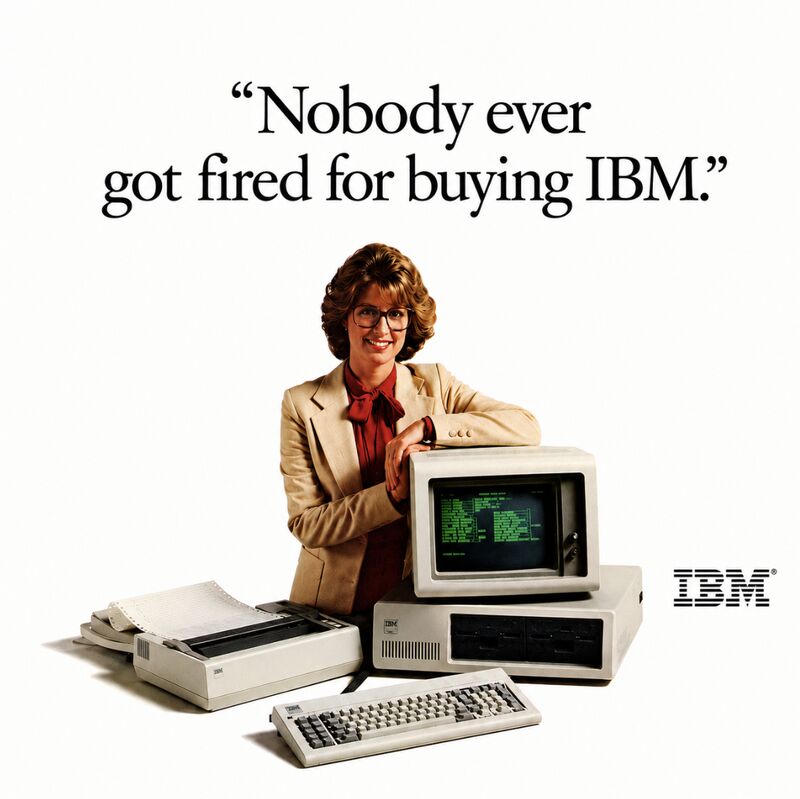
- Your reputation: Two products can be nearly identical, yet one is perceived as clearly different because of how it’s positioned, communicated, or experienced. Think of IBM which long had a reputation of being the safest IT choice one could make. The expression “Nobody ever got fired for buying IBM” was a truism that started getting traction in the seventies, and cemented the company’s reputation as the most reliable brand.
3. Once you’re differentiated, you remain differentiated.
Positioning is not a one-time exercise that you’re doing before launching your product. Your unique advantage today can become common practice tomorrow. Unfortunately, you cannot stop competitors from copying what works. That’s why differentiation is a continuous process of refinement and adaptation.
I remember how, during the pandemic, Zoom quickly became the standard for video meetings thanks to its ease of use. But typical Zoom features like virtual backgrounds and breakout rooms got copied fast, and soon Microsoft Teams surpassed Zoom.
4. "We are cheaper" is a sustainable differentiation.
Without a truly unique position, brands often take refuge in going cheaper than the competition. That might seem like a good strategy to win market share fast, but it’s far from sustainable. There’s always someone who is willing to go even lower, which inevitably leads to a race to the bottom.
A good example: around 2014, a price war broke out in the cloud storage market. Giants like Google, Microsoft, and Amazon slashed their rates drastically to draw users into their own ecosystems, Android, Office 365, AWS. For Dropbox, which relied solely on storage revenue, this posed an existential threat. While the tech giants could treat cloud storage as a loss leader, Dropbox had no such luxury. It had to adopt a different strategy to survive: shift from consumer storage to the business market.
5. The customer will naturally understand what sets you apart.
If the product is good enough, its unique value speaks for itself, right? Not really. If you can’t explain your product in a single, simple, clear message on your homepage or during a sales conversation, your point of differentiation doesn’t exist in the customer’s eyes.
Take Google Wave. Launched in 2009, it combined email, chat, and real-time document collaboration into one ambitious tool, built by the same team behind Google Maps. But nobody, including the journalists reviewing it, could explain in one sentence what Wave actually was or when you’d use it. Users logged in, stared at an empty canvas, and had no idea what to do. A year later, Google pulled the plug. The technology was good, but the value never landed with the people it was built for.
6. A differentiated product name can be sufficient.
You could come up with a fancy name or eye-catching product package. Sure, that may grab some attention at first. But it’s not positioning if your product or service isn’t actually that different underneath. This is not to say that a good product name is useless. But positioning has to be more than that.
A good example is the AI-ification of product names in recent years. There has been an avalanche of software brands sticking ‘AI’ into their name, hoping to sound innovative, or at least like a successor of something that doesn’t have AI in it. The reality is, in a few years, it will sound outdated. Almost every software brand is an AI brand now. As naming agency Spellbrand puts it, calling your company “SomethingAI” today is like calling your company “SomethingDotCom” in 2001.
Getting differentiation right
“Don’t be better, be different” is catchy advice. But as these six mistakes show, being different is only the starting point, not the destination. Real differentiation has to be relevant to your customer, defensible over time, and clear enough to explain in one sentence. Miss any of those, and the “different” part won’t save you.
Levi’s black jeans worked because they meant something to a very specific audience, at a very specific moment, not because black was different for the sake of being different. That’s the distinction worth holding onto: differentiation isn’t a creative extra you add at the end. It’s a discipline you build into the positioning from day one.
Positioning is easy to get wrong in exactly these ways, even for teams who know their product inside out. If you’re unsure whether your differentiation actually lands, a fresh, outside perspective usually helps.